



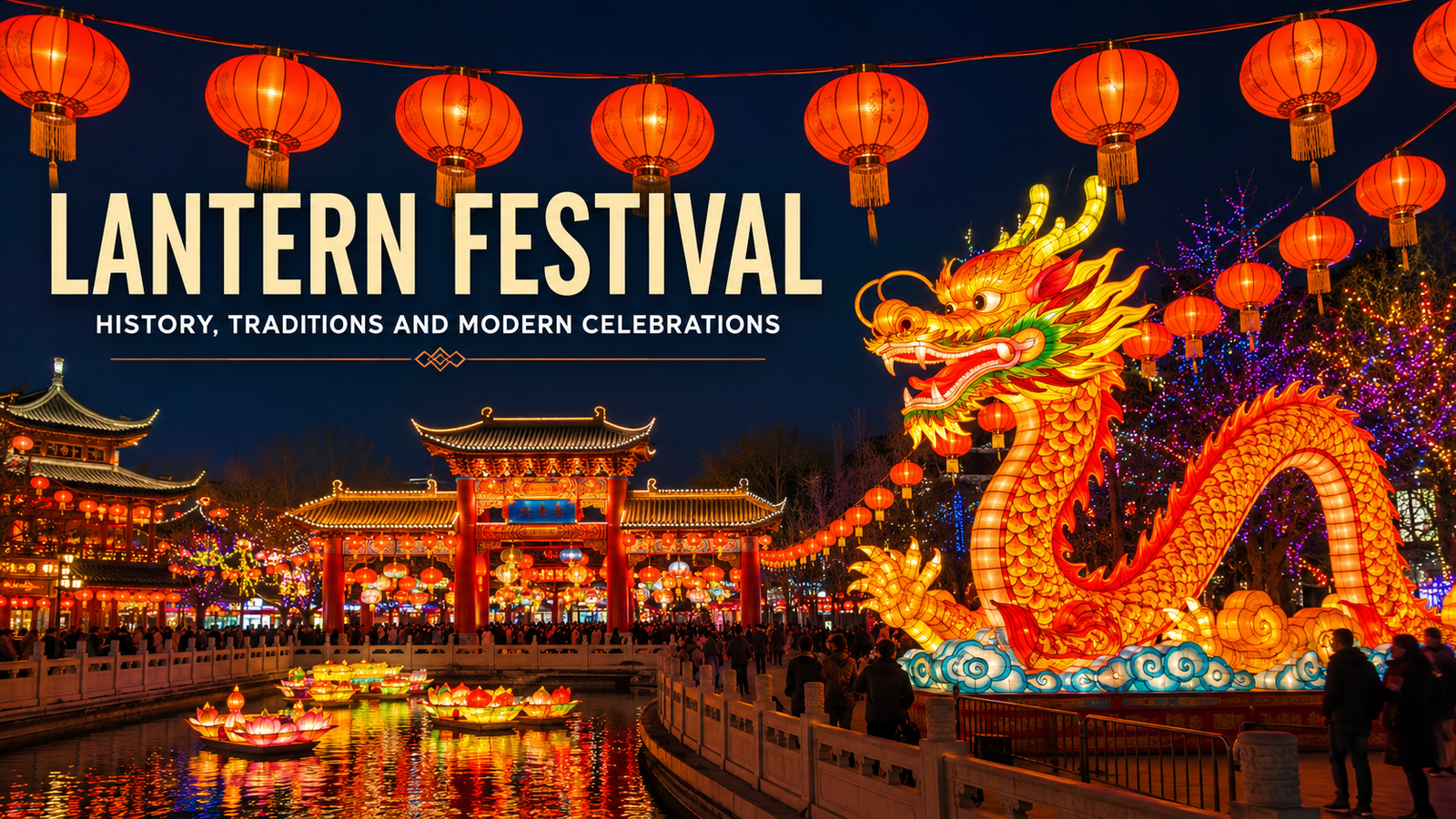
What Is the Lantern Festival?
The Lantern Festival is a traditional Chinese festival celebrated on the 15th day of the first lunar month, marking the first full moon of the Lunar New Year.
It signals the official end of the Chinese New Year celebrations and welcomes brighter days ahead. Families gather to admire lantern displays, solve lantern riddles, enjoy festive foods and watch cultural performances.
Although it began in China, the festival is now celebrated across many countries with significant Chinese communities, including:
- Singapore
- Malaysia
- Taiwan
- Hong Kong
- Vietnam
- Thailand
- Indonesia
- Australia
- United Kingdom
- United States
- Canada
Today, many cities host public lantern festivals that attract visitors from around the world.
The History of the Lantern Festival
The history of the Lantern Festival stretches back more than 2,000 years, making it one of China’s oldest surviving festivals.
Historians believe the festival originated during the Han Dynasty (206 BC–220 AD). During this period, Buddhism was spreading across China. According to historical records, Emperor Ming of Han learned that Buddhist monks lit lanterns to honour Buddha on the fifteenth day of the lunar month. Inspired by this tradition, he ordered lanterns to be displayed throughout the imperial palace and temples.
Over time, this religious observance gradually evolved into a nationwide celebration enjoyed by people from all walks of life.
Lantern Festival Through the Dynasties
Han Dynasty
The earliest celebrations were relatively modest and focused on religious ceremonies and lantern lighting.
Tang Dynasty
The Tang Dynasty witnessed enormous growth in the festival’s popularity. Lantern displays became larger, more artistic and open to the public.
Government officials organised celebrations that attracted thousands of visitors.
Song Dynasty
Lantern craftsmanship flourished.
Artisans began creating:
- Animal lanterns
- Palace lanterns
- Rotating lanterns
- Silk lanterns
- Mechanical lantern displays
Festivals often lasted several days and included music, theatre and fireworks.
Ming and Qing Dynasties
The festival became one of the largest annual celebrations in China.
Markets remained open late into the evening, while streets were decorated with elaborate lantern displays that represented prosperity and happiness.
Many traditions from these dynasties continue today.
Why Is the Lantern Festival Celebrated?
The Lantern Festival celebrates several important cultural values.
Family Reunion
One of the festival’s most important themes is family togetherness.
Relatives gather to:
- Share meals
- Eat traditional desserts
- Watch lantern displays
- Enjoy performances
- Celebrate the first full moon together
Hope and New Beginnings
The full moon symbolises completeness and harmony.
Lighting lanterns represents:
- Bright futures
- Good luck
- Health
- Peace
- Prosperity
Welcoming Spring
The festival also celebrates the arrival of spring after winter.
For agricultural communities, this represented optimism for successful harvests and favourable weather.
When Does the Lantern Festival Take Place?
Unlike fixed-date holidays, the Lantern Festival follows the Chinese lunar calendar.
It always falls on the 15th day of the first lunar month, which usually occurs in February or early March on the Gregorian calendar.
| Year | Lantern Festival Date |
|---|---|
| 2026 | 3 March |
| 2027 | 20 February |
| 2028 | 9 February |
| 2029 | 26 February |
| 2030 | 15 February |
Because the date changes annually, many international festivals announce their schedules several months in advance.
Traditional Lantern Festival Customs
Over centuries, numerous customs have become associated with the Lantern Festival.
While regional traditions vary, several activities are recognised throughout China and overseas.
Admiring Lantern Displays
The highlight of every Lantern Festival is the lantern exhibition.
Lanterns appear in countless shapes and sizes, including:
- Flowers
- Dragons
- Tigers
- Rabbits
- Fish
- Zodiac animals
- Mythical creatures
- Famous buildings
Modern festivals often feature lanterns reaching several storeys high.
Entire parks become illuminated with colourful artwork made from silk, paper, steel frames and LED lighting.
Solving Lantern Riddles
An ancient tradition involves attaching riddles to lanterns.
Visitors attempt to solve these puzzles, with successful participants often receiving small prizes.
Lantern riddles encourage learning while adding fun to the celebration.
Common topics include:
- Proverbs
- Chinese characters
- History
- Literature
- Nature
- Animals
This tradition remains especially popular among families.
Lighting Lanterns
People light lanterns to symbolise:
- Wisdom
- Guidance
- Good fortune
- Happiness
- Positive energy
Many communities also release floating lanterns or sky lanterns where permitted, although environmental regulations now limit this practice in many locations.
The Meaning Behind Lanterns
Lanterns are much more than beautiful decorations.
Each colour and design carries symbolic meaning.
| Lantern Colour | Traditional Meaning |
|---|---|
| Red | Good fortune and happiness |
| Gold | Wealth and success |
| Yellow | Royal heritage and honour |
| Green | Health and growth |
| Pink | Romance and affection |
| White | Purity and remembrance |
| Blue | Hope and peace |
Animal lanterns also carry symbolism.
For example:
- Fish represent abundance.
- Rabbits symbolise longevity.
- Dragons signify strength and prosperity.
- Cranes represent long life.
- Phoenixes symbolise harmony and renewal.
Lantern Festival Foods
Food plays an essential role in every Lantern Festival celebration.
Families prepare dishes that represent unity, happiness and prosperity.
Tangyuan
The most famous Lantern Festival food is tangyuan.
These sweet glutinous rice balls are usually filled with:
- Black sesame paste
- Peanut paste
- Red bean paste
- Lotus seed paste
- Sweet bean fillings
The round shape represents family reunion and completeness.
Eating tangyuan together expresses wishes for a harmonious year ahead.
Regional Variations
Different regions prepare tangyuan differently.
Northern China often serves larger, handmade rice balls.
Southern China typically produces smoother versions with delicate fillings.
Both remain popular during the festival.
Other Traditional Foods
Depending on the region, families may also enjoy:
- Spring rolls
- Dumplings
- Sweet pastries
- Rice cakes
- Seasonal fruits
- Tea ceremonies
These foods complement the festive atmosphere and bring generations together around the dining table.
Traditional Performances and Entertainment
The Lantern Festival is filled with lively entertainment that showcases China’s rich cultural heritage.
Dragon Dance
The dragon dance is one of the festival’s most recognisable performances.
A long dragon puppet is carried by a team of performers who move in coordinated patterns to the rhythm of drums, cymbals and gongs.
The dragon symbolises:
- Strength
- Wisdom
- Prosperity
- Good fortune
Communities believe the performance helps bring blessings and positive energy for the coming year.
Lion Dance
Another popular attraction is the lion dance.
Two performers work together inside an elaborate lion costume while musicians provide energetic accompaniment.
The lion is believed to chase away evil spirits and attract luck, making it a common sight during both Chinese New Year and the Lantern Festival.
Folk Music and Cultural Shows
Many celebrations also feature:
- Traditional Chinese opera
- Martial arts demonstrations
- Folk dancing
- Acrobatic performances
- Drum performances
- Children’s cultural activities
These events preserve traditional arts while creating an enjoyable experience for visitors of all ages.
Famous Lantern Festival Celebrations Around the World
Although the Lantern Festival originated in China, it is now celebrated across the globe. Many destinations blend traditional customs with local culture, creating unforgettable experiences for visitors.
Beijing, China
China’s capital hosts impressive lantern displays in parks, temples and public squares. Visitors can enjoy:
- Traditional lantern exhibitions
- Dragon and lion dances
- Folk music performances
- Tangyuan food stalls
- Cultural workshops
The city’s historical landmarks provide a stunning backdrop for the celebrations.
Shanghai, China
Shanghai combines ancient traditions with modern creativity.
Highlights include:
- Giant illuminated lantern sculptures
- Interactive light installations
- Riverfront lantern displays
- Family-friendly activities
- Night markets
Many of the lanterns feature innovative designs inspired by contemporary art while maintaining traditional symbolism.
Zigong, China
Known as the “Lantern Capital of China,” Zigong is internationally recognised for its extraordinary lantern craftsmanship.
Its annual Lantern Festival features:
- Massive themed lantern displays
- Animated lantern sculptures
- Cultural performances
- Traditional handicraft exhibitions
Many cities around the world invite Zigong artisans to create lantern exhibitions for international festivals.
Taiwan
Taiwan’s Lantern Festival attracts millions of visitors each year.
Celebrations often include:
- Giant illuminated lanterns
- Drone light shows
- Fireworks
- Floating lantern ceremonies (where permitted)
- Traditional music and dance
Each year features a different zodiac animal as the festival’s main theme.
Singapore
Singapore celebrates the Lantern Festival with colourful decorations throughout Chinatown.
Visitors enjoy:
- Street performances
- Food festivals
- Lantern displays
- Cultural exhibitions
- Community celebrations
The festival reflects Singapore’s multicultural identity while preserving Chinese traditions.
Malaysia
Cities such as Kuala Lumpur and Penang host lively Lantern Festival celebrations.
Popular activities include:
- Family gatherings
- Temple visits
- Lantern competitions
- Traditional Chinese performances
- Local food markets
Many communities also organise educational events to introduce younger generations to the festival’s history.
United Kingdom
Major cities including London, Manchester and Birmingham organise Lantern Festival events through local Chinese communities.
These celebrations often feature:
- Cultural exhibitions
- Dragon dances
- Lantern-making workshops
- Chinese cuisine
- Family entertainment
The festival has become increasingly popular among people from diverse cultural backgrounds.
United States and Canada
Chinese New Year celebrations in cities such as San Francisco, Vancouver and New York often conclude with Lantern Festival events.
Visitors can enjoy:
- Community parades
- Lantern displays
- Live music
- Traditional performances
- Educational exhibits about Chinese culture
Modern Lantern Festival Celebrations
While the Lantern Festival remains deeply rooted in tradition, modern celebrations have embraced new technologies and creative ideas.
Spectacular LED Lantern Displays
Traditional candles have largely been replaced by energy-efficient LED lighting.
Modern lanterns now offer:
- Dynamic colour changes
- Animated lighting effects
- Interactive displays
- Environmentally friendly lighting
- Enhanced safety
These innovations allow artists to create larger and more detailed lantern installations.
Digital Light Shows
Many cities now combine traditional lantern displays with:
- Projection mapping
- Laser shows
- Drone light displays
- Interactive multimedia experiences
- Digital storytelling
These attractions appeal to younger audiences while complementing traditional customs.
Social Media and Tourism
The Lantern Festival has become a major international tourism event.
Visitors often share their experiences through:
- Photography
- Travel blogs
- Social media platforms
- Video content
- Live streaming
This global exposure has introduced millions of people to the festival’s cultural significance.
Eco-Friendly Celebrations
Environmental awareness has encouraged many organisers to adopt sustainable practices.
Modern festivals increasingly use:
- Recyclable materials
- Solar-powered lighting
- LED technology
- Paper from sustainable sources
- Reusable lantern frames
Many communities have also reduced the use of fireworks and sky lanterns to protect wildlife and reduce fire risks.
Traditional vs Modern Lantern Festival
| Feature | Traditional Festival | Modern Festival |
|---|---|---|
| Lighting | Candles and oil lamps | LED lighting |
| Lanterns | Handmade paper and silk | Large artistic installations |
| Entertainment | Folk music and opera | Light shows and multimedia |
| Technology | None | Interactive displays and drones |
| Audience | Local communities | International visitors |
| Promotion | Word of mouth | Digital media and tourism campaigns |
| Sustainability | Limited | Eco-friendly materials and energy-efficient lighting |
Why the Lantern Festival Still Matters Today
Despite rapid technological change, the Lantern Festival continues to hold great cultural importance.
It reminds people of values that remain relevant across generations:
- Family togetherness
- Community spirit
- Respect for tradition
- Cultural identity
- Hope for the future
For many families, attending the festival is not simply about enjoying beautiful lanterns. It is an opportunity to reconnect with loved ones, pass traditions to younger generations and celebrate cultural heritage.
The festival also encourages intercultural understanding. Public celebrations around the world allow people from different backgrounds to experience Chinese customs, food, music and art in an inclusive environment.
Tips for Visiting a Lantern Festival
If you plan to attend a Lantern Festival, a little preparation can help you make the most of the experience.
Arrive Early
Popular festivals become crowded after sunset. Arriving before dark gives you time to explore, find good viewing spots and enjoy daylight exhibitions.
Wear Comfortable Clothing
Many festivals involve walking through parks, gardens or city streets. Comfortable footwear and weather-appropriate clothing will make your visit more enjoyable.
Bring a Camera
Lantern displays create spectacular photo opportunities.
For the best results:
- Use night mode on your camera or smartphone.
- Avoid using flash near delicate lanterns.
- Respect any photography rules set by organisers.
Try Traditional Foods
Don’t miss the chance to taste authentic tangyuan and other regional specialities available at festival markets.
Respect Local Customs
Remember that many Lantern Festival events have religious or cultural significance.
Visitors should:
- Follow local guidelines.
- Avoid touching lantern displays.
- Dispose of rubbish responsibly.
- Respect performances and ceremonies.
Interesting Facts About the Lantern Festival
- The Lantern Festival has been celebrated for more than 2,000 years.
- It marks the final day of the Chinese New Year celebrations.
- The festival always coincides with the first full moon of the lunar year.
- Tangyuan symbolises family unity and completeness.
- Lantern riddles have entertained festival visitors for centuries.
- Some lanterns require hundreds of hours to design and construct.
- Large international lantern festivals can feature thousands of illuminated displays.
- The festival has inspired similar light festivals in many countries around the world.
Conclusion
The Lantern Festival is much more than a spectacular display of colourful lights. It is a celebration of family, hope, cultural heritage and community that has endured for over two millennia.
From its origins during the Han Dynasty to today’s breathtaking international festivals, the Lantern Festival continues to evolve while preserving its traditional values. Whether you are admiring handcrafted lanterns, solving ancient riddles, enjoying a bowl of tangyuan or attending a modern light show, each experience reflects the festival’s enduring message of unity, prosperity and renewal.
As more countries embrace this vibrant tradition, the Lantern Festival serves as a bridge between cultures, allowing people from all backgrounds to appreciate one of the world’s most cherished celebrations. Whether you are learning about its history or planning your first visit, the festival offers a memorable glimpse into the richness of Chinese culture and the timeless joy of gathering beneath the light of the full moon.