



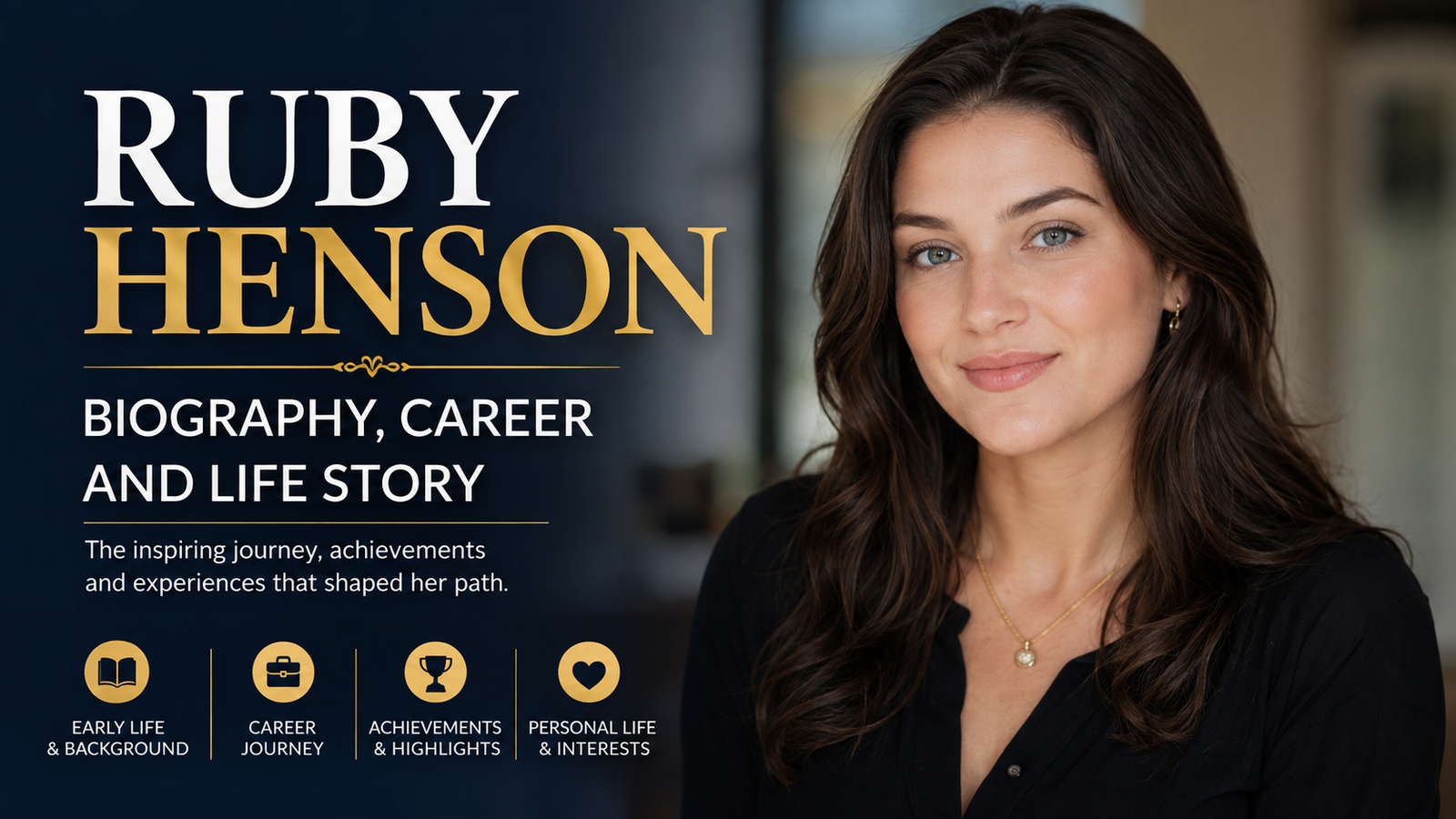
Who Is Ruby Henson?
Ruby Henson is a name that may attract interest from readers searching for biographical information, career details and personal background. However, a person’s name alone does not always provide enough context to create a fully verified public biography.
There can be several reasons for this. Some individuals share the same name, while others maintain a relatively private life. In other cases, public information may be scattered across different sources and may not provide a complete picture.
For that reason, a responsible biography of Ruby Henson should focus on information that can be supported and clearly distinguish between confirmed details and areas where reliable public information is limited.
The most useful way to understand a person’s life story is to consider several connected areas:
- Early life and upbringing
- Education and personal development
- Career beginnings
- Professional achievements
- Challenges and major turning points
- Personal interests and values
- Long-term influence or public significance
Together, these elements help create a broader understanding of an individual’s journey.
Why Biography Matters
Biographies remain popular because they connect facts with human experience. Readers are naturally interested in understanding how people reached their current position and what happened along the way.
A well-written biography can answer questions such as:
- Where did the person’s journey begin?
- What influenced their ambitions?
- How did they enter their chosen field?
- What challenges did they face?
- What achievements are associated with their career?
- What can others learn from their experiences?
When discussing Ruby Henson, these questions provide a useful framework for understanding her story without relying on unsupported speculation.
Ruby Henson’s Early Life and Background
The Importance of Early Influences
Early life often plays an important role in shaping a person’s personality, interests and future ambitions. Family environment, community, education and childhood experiences can all influence the direction a person eventually takes.
For a biography of Ruby Henson, verified information about her early years should always take priority over assumptions. If details about her birthplace, parents or childhood are not publicly confirmed through reliable sources, those gaps should be acknowledged rather than filled with speculation.
This is particularly important in online biographies, where inaccurate information can easily be copied from one website to another and eventually appear to be factual.
What Can Shape a Person’s Early Journey?
Several factors commonly influence personal development:
- Family values – Early guidance can shape confidence, discipline and ambition.
- Education – Schools and teachers can introduce new interests and opportunities.
- Community – The environment in which someone grows up can influence perspective.
- Personal experiences – Successes and setbacks often contribute to resilience.
- Role models – Parents, teachers, public figures and mentors can inspire career choices.
Understanding these influences helps readers see a biography as a journey rather than a collection of isolated facts.
Education and Personal Development
Why Education Can Be an Important Part of a Biography
Education is often a key stage in the development of professional skills and personal confidence. Formal education may provide technical knowledge, while practical experiences can develop communication, leadership and problem-solving abilities.
The educational background of Ruby Henson should only be described in detail where reliable information is available. Educational claims can be especially difficult to verify when a person is not a widely documented public figure.
Nevertheless, personal development does not depend entirely on schools or qualifications.
People also develop through:
- Work experience
- Independent learning
- Mentorship
- Creative projects
- Community involvement
- Professional training
- Personal challenges
This broader view is useful when considering any career journey.
Personal Growth Beyond the Classroom
A successful professional path rarely follows a perfectly straight line. People may change interests, develop new skills or discover unexpected opportunities over time.
For example, someone may begin with one area of study but later build a career in a completely different field. Others may learn essential skills through practical work rather than formal qualifications.
This ability to adapt is often one of the most important elements of long-term growth.
How Did Ruby Henson Begin Her Career?
The First Steps of a Professional Journey
The beginning of a career is often one of the most important periods in a person’s life story. Early opportunities can provide practical experience, professional connections and a clearer understanding of future goals.
For Ruby Henson, specific details about her first professional roles should be confirmed through reliable and relevant sources before being presented as established fact.
In general, the early stage of a career may involve:
- Entry-level positions
- Training and skill development
- Volunteer or independent work
- Building a professional network
- Developing a portfolio
- Learning through practical experience
- Identifying long-term career goals
These first steps may not always receive public attention, but they can play a major role in future progress.
Building Experience Over Time
Career development usually happens gradually. A person’s abilities, responsibilities and opportunities can change significantly over the years.
Professional growth may include moving into more senior roles, taking on complex projects or developing expertise in a particular area.
A useful way to understand career progression is shown below.
| Career Stage | Typical Focus |
|---|---|
| Early stage | Learning skills and gaining experience |
| Development stage | Building confidence and professional knowledge |
| Growth stage | Taking on greater responsibility |
| Established stage | Developing expertise and influence |
| Long-term stage | Creating a lasting professional contribution |
Every career is different, and not everyone follows these stages in the same order. Some people change direction several times before finding the work that suits them best.
Ruby Henson’s Career Journey
Career Development and Professional Identity
A career is more than a job title. It often reflects a combination of interests, skills, decisions and opportunities.
When readers search for information about Ruby Henson’s career, they may be interested in understanding what she is known for, how her professional journey developed and which experiences contributed to her public profile.
The most accurate approach is to rely on documented information from credible sources, such as:
- Official professional websites
- Reputable interviews
- Recognised publications
- Established industry organisations
- Verified professional profiles
- Official records where appropriate
Unverified social-media posts, copied biographies and anonymous websites should not be treated as equally reliable.
Career Achievements Should Be Viewed in Context
Achievements can take many forms. They are not limited to awards or public recognition.
Professional success may include:
- Completing significant projects
- Developing specialist expertise
- Reaching leadership positions
- Making a contribution to a community
- Building a successful body of work
- Helping others through mentorship
- Demonstrating consistency over time
The importance of an achievement often depends on its context. A milestone that appears small to an outsider may represent years of effort and personal growth.
What Qualities Can Support Career Growth?
Skills That Often Make a Difference
Although every individual is different, certain qualities can help people navigate professional and personal challenges.
These include:
Adaptability
Industries change, technology develops and opportunities shift. The ability to learn and adapt can help people remain effective in changing circumstances.
Persistence
Long-term goals often require patience. Setbacks do not necessarily mean failure; they can provide valuable lessons for future decisions.
Communication
Clear communication is useful in almost every field. It helps people share ideas, build relationships and work effectively with others.
Curiosity
A willingness to learn can open new opportunities and encourage continuous improvement.
Resilience
Difficult experiences are part of most life journeys. Resilience helps people recover, reassess and continue moving forward.
These qualities provide a useful lens through which to understand any developing career, including the broader story associated with Ruby Henson.
Challenges and Turning Points in Life
Why Challenges Matter in a Biography
A biography that focuses only on achievements can feel incomplete. Challenges, uncertainty and difficult decisions often reveal just as much about a person’s journey.
Common career and life challenges include:
- Financial uncertainty
- Career changes
- Professional competition
- Public criticism
- Personal setbacks
- Balancing work and private life
- Relocating or adapting to a new environment
The response to a challenge can become a significant turning point.
A Simple Example of Career Adaptation
Imagine a professional who enters a field with one set of expectations but later discovers that their strengths lie elsewhere. Rather than viewing the change as failure, they may acquire new skills and move into a more suitable role.
This process of reassessment is common in modern careers.
The broader lesson is simple: progress is not always linear.
Ruby Henson’s Personal Life and Interests
Respecting Privacy in Biographical Writing
Readers are often curious about the personal lives of people they search for online. However, curiosity does not justify publishing private or unverified information.
Details about relationships, family members, residence or personal circumstances should only be included when they are publicly available through trustworthy sources and are appropriate to discuss.
Responsible biographical writing should avoid:
- Rumours about relationships
- Claims based on anonymous posts
- Private addresses or location details
- Speculation about family matters
- Unverified financial information
- Misleading statements presented as fact
Privacy is particularly important when a person is not a major public figure.
Interests Beyond Professional Life
A person’s identity is rarely defined entirely by their career.
Personal interests may include:
- Creative activities
- Reading and learning
- Travel
- Community work
- Sports and fitness
- Technology
- Art and culture
- Family and social connections
When these interests are publicly documented and relevant, they can add useful context to a biography.
They can also help readers understand the human side of a professional journey.
Why Are People Interested in Ruby Henson?
Interest in a name can grow for many reasons. A person may become associated with a professional field, public appearance, creative project, organisation or personal connection that leads others to search for more information.
Searches for Ruby Henson biography may reflect a desire to find clear answers to questions such as:
- Who is Ruby Henson?
- What is Ruby Henson known for?
- What is her professional background?
- How did her career develop?
- What are the important events in her life story?
A high-quality biography should answer these questions carefully while avoiding the temptation to invent details simply to make the article appear more complete.
Accuracy is more valuable than unnecessary speculation.
Lessons From Ruby Henson’s Life Story
Even when a biography contains limited publicly documented information, the process of examining a life and career can still highlight useful ideas about personal development.
1. Every Journey Has a Starting Point
Successful careers often begin with small opportunities. Early work, training and practical experience can become the foundation for larger achievements.
2. Growth Takes Time
Professional development is rarely immediate. Skills improve through practice, learning and experience.
3. Adaptability Creates Opportunities
Changing circumstances can require new approaches. Being willing to learn can make career transitions easier.
4. Privacy Deserves Respect
Not every aspect of a person’s life belongs in the public domain. Responsible writing should recognise the difference between public information and private matters.
5. Facts Matter
A biography becomes more useful when readers can trust the information. Accuracy should always come before dramatic storytelling.
How to Research a Biography Responsibly
Start With Primary Sources
Primary sources are often the strongest place to begin.
Examples include:
- Official websites
- Direct interviews
- Public statements
- Published autobiographical material
- Official professional records
These sources can provide information directly connected to the person.
Compare Multiple Reliable Sources
One source can contain an error. Comparing several reputable sources can help identify inconsistencies.
A simple research process might look like this:
- Find the person’s official or verified presence.
- Identify reputable interviews or publications.
- Check dates and career details.
- Compare information across independent sources.
- Remove claims that cannot be supported.
- Clearly separate confirmed facts from uncertain information.
Be Careful With Search Results
Search engines can display pages that repeat information from other websites. A claim appearing on several pages does not automatically make it true.
For example, ten websites may all copy the same inaccurate biography.
That is why researchers should try to identify the original source of a claim.
A Practical Biography Checklist
Before publishing an article about Ruby Henson or any other individual, check the following:
Identity
-
Have you confirmed that the information refers to the correct person?
-
Could multiple people share the same name?
Career
-
Are job titles and achievements supported by reliable evidence?
-
Have you verified dates and major career milestones?
Personal Life
-
Is the information publicly available and appropriate to include?
-
Have you avoided rumours and private information?
Sources
-
Are the sources credible?
-
Have you compared important claims with more than one source?
Writing
-
Is the biography clear and easy to understand?
-
Have you distinguished facts from assumptions?
-
Have you removed exaggerated or unsupported statements?
This checklist can improve the quality and trustworthiness of biographical content.
Frequently Asked Questions About Ruby Henson
1. Who is Ruby Henson?
Ruby Henson is the subject of online biographical interest, with readers searching for information about her background, career and life story. Specific biographical details should be confirmed through reliable sources because people with the same name may exist and publicly documented information may vary.
2. What is Ruby Henson known for?
What Ruby Henson is known for depends on the specific individual being referenced. A reliable biography should identify the correct person and use verified sources to describe her professional work, achievements or public profile.
3. Where was Ruby Henson born?
A birthplace should only be stated when it can be confirmed through a reliable public source. Biographical content should avoid guessing or repeating unverified information.
4. What is known about Ruby Henson’s career?
Readers interested in Ruby Henson’s career should look for information from credible sources, including official profiles, recognised publications and reputable interviews. Career details should be verified before publication.
5. Is information about Ruby Henson’s personal life publicly available?
The availability of personal information varies. Responsible biographies should respect privacy and include personal details only when they are publicly documented, relevant and appropriate to share.
Conclusion
The life story of Ruby Henson is best approached with a focus on accuracy, context and responsible biographical writing. Readers may be interested in her background, career, achievements and personal journey, but a trustworthy article should never replace missing information with assumptions.
A meaningful biography does more than collect names, dates and career titles. It explains how different experiences connect and helps readers understand the wider journey of an individual. At the same time, good biographical writing recognises its limits and respects the difference between verified public information and private life.
Whether researching Ruby Henson or any other person, the same principle remains important: use reliable sources, verify major claims and avoid repeating rumours as facts. This approach creates content that is more useful for readers and more trustworthy in the long term.